
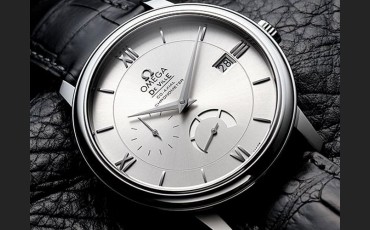
There comes a time in everyone's life when the trusty Swatch you've owned since you were 15 just doesn't cut it anymore. Yet the leap from quartz to mechanical can seem daunting to unnecessary. After all, isn't a mechanical watch just an out-of-place piece of history, less punctual than your phone?
While battery-powered watches are great, and your phone is probably essential, a mechanical watch is something else entirely. It's a connection to the past; a statement about what kind of person you are; a daily companion that can't work without your heartbeat.
"In my opinion, a mechanical watch is an emotional purchase," says Mark Toulson, Head of Watch Buying at The Swiss Watch Company. "It matters because you're either winding it by hand or powering it through the motion of your wrist while you wear it, and if the watch has an open case back, you can actually see the movement in operation, which is a wonderful thing."
Omega Seamaster Diver 300 — case back
So if you're sitting on the proverbial fence, or just considering making the switch, perhaps our guide to the excellence of mechanical watches will convince you to trade your battery-powered past for a future of gear trains and balance wheels.
What is a mechanical watch?
When it comes to watches, "mechanical" is a collective term for timepieces powered by movements that aren't quartz or battery operated. The sub-divisions are "automatic" — where a rotor spins as your wrist moves, powering the watch — and "manual-wind" — where you have to put in the effort yourself.
The difference isn't always a matter of price, but of convenience. A manual-wind A. Lange & Söhne might set you back around £27,000, compared to a £300 Tissot automatic. The question is, are you the kind of person who likes a daily connection with your watch? A reminder that what's on your wrist is driven by gears and springs? Or would you rather it just worked?